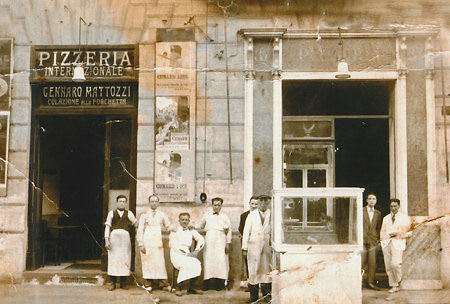
The word is Italian. The place is Naples. Pizza as a word appears in Latin texts from 997 AD in Gaeta, southern Italy, but the pizzeria — the dedicated shop for making and selling it — took form in Naples in the 18th century. The city was poor and dense, and pizza was a cheap street food sold to people who ate standing up or walking. It was not a restaurant dish. It was working food that happened to be perfect.
The Neapolitan pizza is a specific thing. The dough is made from type 00 flour, water, salt, and yeast. It ferments for at least 24 hours. It is stretched by hand, not rolled. It goes into a wood-fired oven at 900 degrees Fahrenheit for 60 to 90 seconds. The result is a crust with char and air and chew that no electric oven at 550 degrees has ever replicated. The EU gave Neapolitan pizza protected designation of origin status in 2009. That is how seriously the Italians take this.
Pizzeria is the Italian suffix for a place that makes pizza. Like gelateria for gelato, or pasticceria for pastry. The English borrowed the word whole. Everywhere that word appears in the world, it traces back to a wood-fired oven on a narrow street in Naples.